How to Prepare for Amazon Prime Day 2026

Shivam Kumar

Amazon Prime Day is one of the biggest opportunities of the year for Amazon brands.
Every year, millions of shoppers wait for Prime Day to make purchases they have been planning for weeks.
They compare products, build wish lists, save items to carts, and wait for the best deals before finally checking out.
For sellers, that means one thing: Prime Day success starts long before Prime Day itself.
The brands that perform best don't simply increase bids and launch discounts when the event begins. They spend weeks building demand, creating audiences, preparing inventory, and planning their advertising strategy.
In this guide, we'll walk through exactly how top Amazon advertisers prepare before Prime Day, what they do during the event, and how they continue driving sales after the event ends.
Phase 1: Build Demand Before Prime Day
Most advertisers think Prime Day starts when the deals go live.
It doesn't.
Prime Day starts weeks before the event, when shoppers begin researching products and comparing brands.
This is where many brands miss a huge opportunity.
While most advertisers focus only on Sponsored Products and Sponsored Brands campaigns, leading brands use Amazon DSP to reach shoppers before they start actively searching on Amazon.
1. Use Amazon DSP to Build Awareness Before Prime Day
Sponsored Ads are great at capturing demand.
Amazon DSP helps create demand.
Using Amazon DSP, brands can reach in-market shoppers across websites, apps, streaming TV, and Amazon-owned properties before Prime Day arrives.
For example, if you sell air purifiers, you don't need to wait for someone to search your brand name on Amazon.
Instead, you can reach shoppers already researching home improvement products, allergy solutions, and air quality products.
By the time Prime Day starts, your brand is already familiar.
This often leads to higher click-through rates, stronger conversion rates, and lower customer acquisition costs during the event.
2. Create a Prime Day Lead-In Budget Plan
One mistake we see every year is brands spending too much budget on Prime Day itself.
The reality is that many Prime Day conversions start days or weeks earlier.
A shopper may:
See a DSP ad three weeks before Prime Day.
Visit your listing.
Return through Sponsored Brands.
Purchase on Prime Day.
If you only look at Prime Day clicks, you'll miss the bigger picture.
Before finalizing your budget plan, analyze previous Prime Day performance using Adbrew's First Touch Tentpole Event Report.
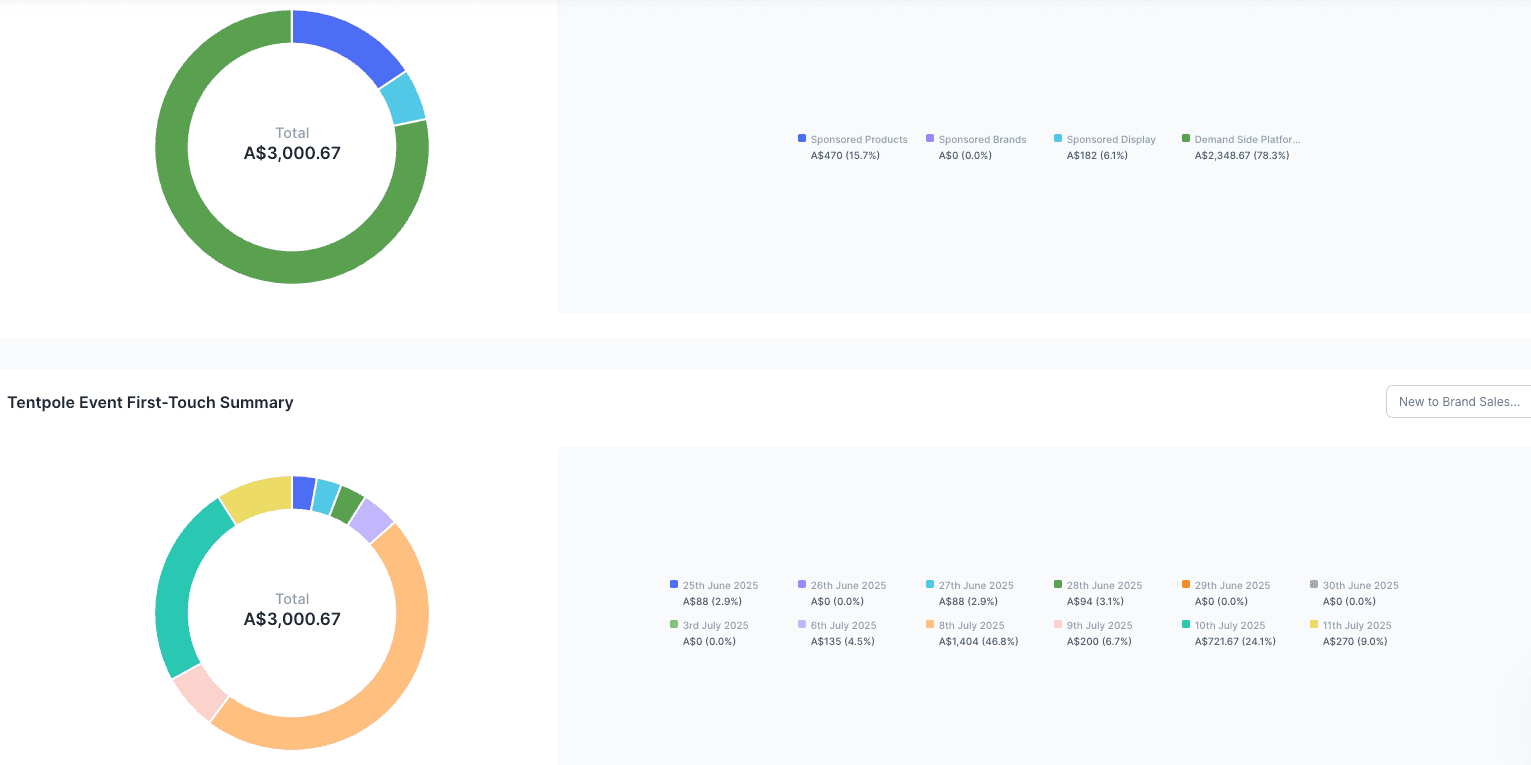
This report helps answer questions like:
How early did customers first engage?
Which campaigns introduced the brand?
How many days passed before conversion?
Which touchpoints influenced Prime Day sales?
These insights help determine how much budget should be allocated before, during, and after the event.
3. Audit Your Product Listings
Prime Day brings more traffic to your listings than almost any other time of year.
That traffic is expensive.
Before increasing ad spend, make sure your listings are ready to convert.
Review:
Product titles
Main images
Secondary images
Product videos
A+ Content
Brand Story modules
FAQs
Ask a simple question:
"If this shopper lands on my listing for the first time, will they understand why this product is worth buying?"
If the answer is no, fix the listing before Prime Day.
4. Protect Inventory Early

Running out of inventory during Prime Day can be expensive.
Look at sales data from previous Prime Day events, recent growth trends, and your current advertising plans to estimate demand.
It's better to carry extra inventory than to lose sales because your best-selling product goes out of stock halfway through the event.
Pay special attention to:
FBA inventory levels
Reorder timelines
Safety stock
Inventory for deal products
5. Optimize for Amazon's AI Shopping Experience
More shoppers are using Amazon's AI-powered shopping features to discover products.
Make sure your listing provides clear information about:
Product benefits
Use cases
Key features
Product comparisons
Frequently asked questions
The easier it is for Amazon to understand your product, the easier it becomes for shoppers to find it.
Phase 2: Prepare for Prime Day Week
6. Create a Prime Day Storefront
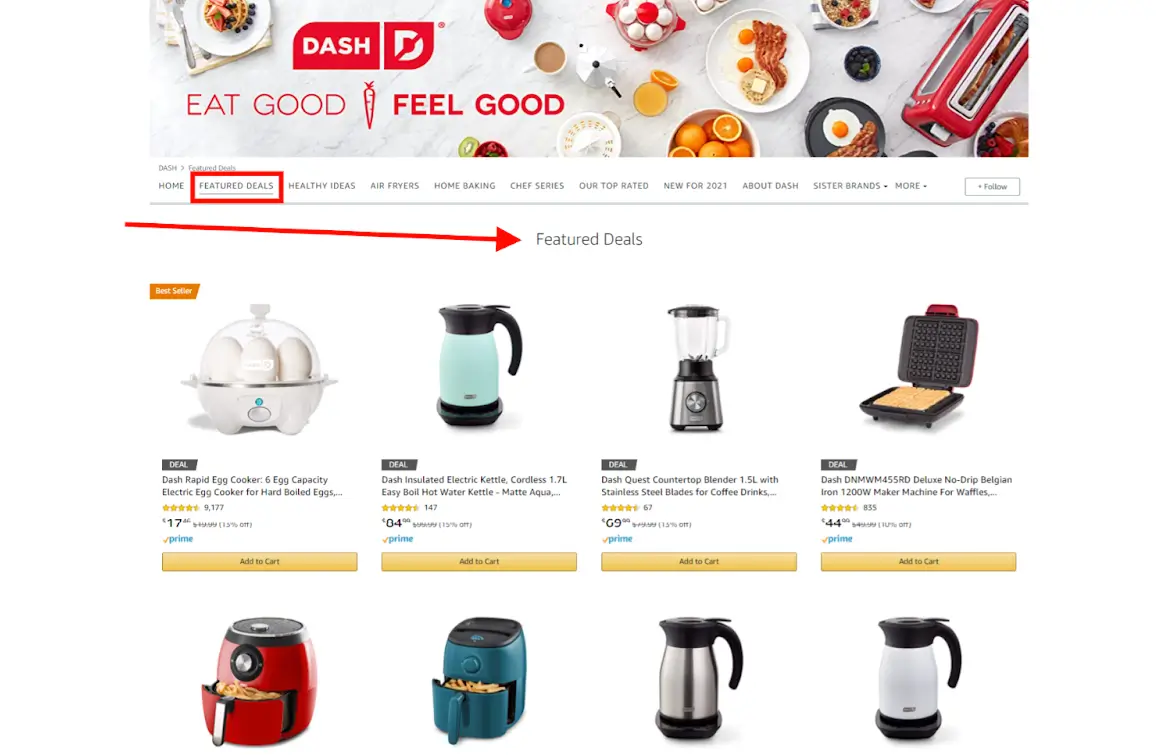
Your Amazon Store should act as a landing page for Prime Day shoppers.
Create a dedicated Prime Day section featuring:
Deal products
Best sellers
Product bundles
New launches
Category collections
A well-organized Store makes it easier for shoppers to discover more products and increases average order value.
7. Build Retargeting Audiences with Amazon Marketing Cloud (AMC)
As Prime Day gets closer, shift your strategy from awareness to re-engagement.
Not every shopper buys the first time they visit your product page.
Many shoppers:
Visit a listing
Compare alternatives
Read reviews
Wait for Prime Day deals
These shoppers are some of your highest-value audiences.
Using Amazon Marketing Cloud (AMC), you can build audiences based on:
Product detail page visitors
Store visitors
Video viewers
Previous customers
Activate these audiences through DSP campaigns 7-14 days before Prime Day.
A simple reminder campaign highlighting your upcoming Prime Day offer can often outperform broad prospecting campaigns.
Phase 3: Execute During Prime Day
Prime Day is not a set-it-and-forget-it event.
The best-performing brands actively monitor performance throughout the day and make adjustments as conditions change.
8. Defend Your Most Important Keywords
Prime Day is one of the few times of the year when competitors aggressively increase budgets and bids at the same time. If you're not careful, you can lose visibility on your highest-value keywords within a few hours.
Instead of spreading your budget across hundreds of search terms, focus on the 5-10 keywords that drive the majority of your sales. These are typically your branded keywords, highest-converting category terms, and hero product keywords.
During the event, monitor Share of Voice and top-of-search placements closely. If competitors start taking visibility away from these keywords, be prepared to increase bids or budgets to defend your position.
For most brands, winning a handful of critical keywords is far more valuable than trying to rank for everything.
9. Increase Campaign Budgets Before They Run Out
Prime Day traffic moves much faster than a normal shopping day. Campaigns that usually spend their budget by evening may run out before noon.
Review your historical Prime Day performance and increase budgets ahead of time, especially for campaigns tied to your best-selling products and highest-converting keywords. Many brands increase campaign budgets by 2-5x during Prime Day to keep up with demand.
More importantly, don't assume your initial budget increase will be enough. Monitor campaign spend throughout the day and be ready to add more budget to campaigns that are performing well.
If you're managing a large account, tools like Adbrew's Hourly Budget Automation can automatically replenish campaign budgets throughout the day so your ads stay active during peak shopping periods.
10. Increase Bids to Stay Competitive
Advertising costs rise during every Prime Day event. More advertisers are competing for the same placements, which pushes CPCs higher across most categories.
Brands that keep their normal bid levels often see declining impressions and reduced top-of-search visibility. As a starting point, consider increasing bids by 30-50% on your most important campaigns, including branded keywords, top-performing search terms, and hero products.
Don't focus too heavily on efficiency metrics during the event. Prime Day is about maximizing profitable visibility while shoppers are actively buying. Monitor performance throughout the day and adjust as needed, but go into the event expecting higher CPCs and planning for them in advance.
11. Use Dayparting and Marketing Stream Data
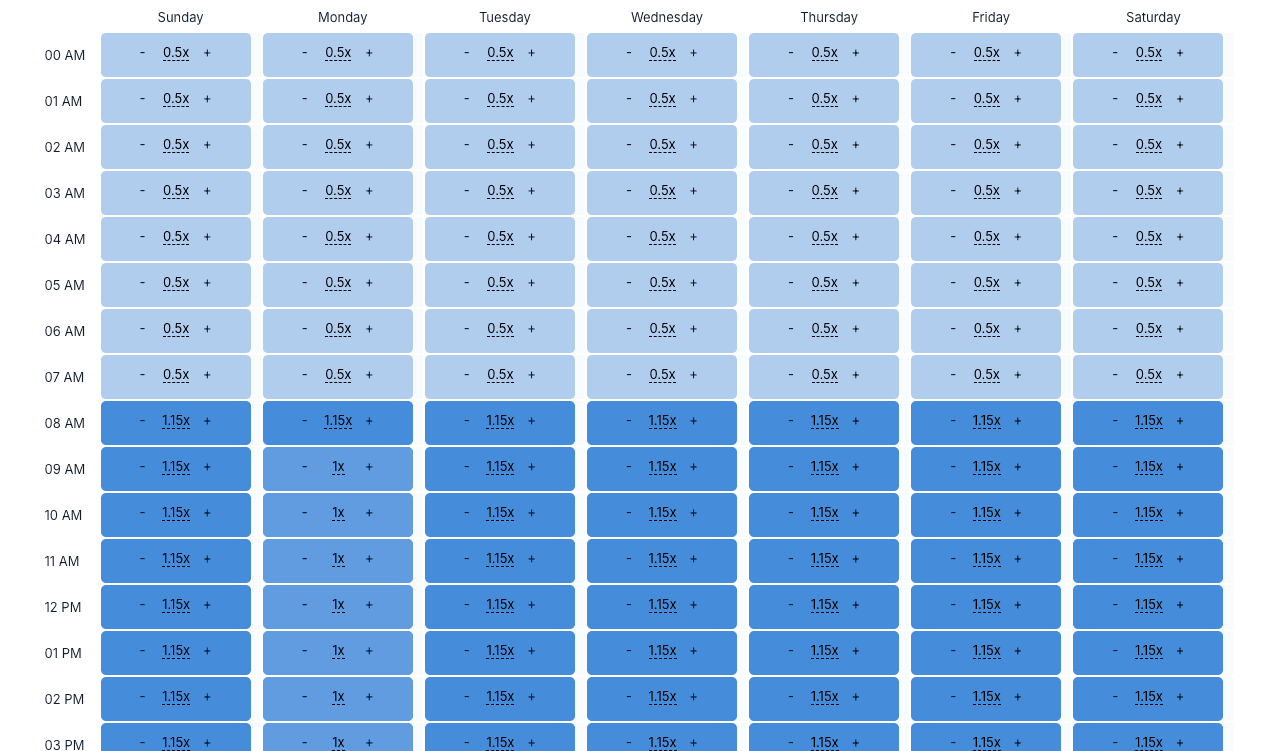
Not every hour of Prime Day performs the same. Some brands see their strongest conversion rates in the morning, while others generate most of their sales later in the evening.
Before Prime Day, analyze historical data using Amazon Marketing Stream to identify hourly sales trends, conversion rates, and budget pacing patterns. This can help you understand when shoppers are most likely to buy and where additional spend can have the biggest impact.
Once the event starts, review performance every few hours rather than waiting until the end of the day. If campaigns are outperforming targets, increase pacing and budget allocation. If efficiency starts to decline, pull back and reallocate spend to stronger time periods.
The brands that win Prime Day are usually the ones making adjustments throughout the event, not the ones relying on settings they configured the week before.
Phase 4: Maximize Post-Prime Day Growth
Many brands stop marketing when Prime Day ends.
That's a mistake.
Prime Day creates one of the largest pools of high-intent shoppers you'll see all year.
12. Retarget Non-Buyers
Not everyone purchases during Prime Day.
Create campaigns targeting:
Product viewers
Store visitors
Cart abandoners
These shoppers already know your brand.
They often convert at much lower costs than new audiences.
13. Turn New Customers Into Repeat Customers
Prime Day should not be viewed as a one-time sales event.
It should be viewed as a customer acquisition event.
Focus on encouraging second purchases through:
Complementary products
Product bundles
Subscribe & Save programs
DSP loyalty campaigns
A customer acquired during Prime Day can generate value for months or years.
Final Thoughts
Prime Day is no longer just a two-day sales event.
It's a multi-week opportunity to build awareness, acquire customers, grow market share, and strengthen your brand's position on Amazon.
The brands that win Prime Day don't simply increase bids when the event starts.
They build demand before the event, defend visibility during the event, and continue marketing after the event ends.
If you start planning early and execute across DSP, AMC, Sponsored Ads, and retail operations, Prime Day can become one of the most profitable growth opportunities of the year.
Conclusion
Amazon Prime Day has emerged as one of the most significant shopping events for both savvy shoppers focused on saving money and sellers aiming to increase their sales. Last year, Prime Day amassed approximately $12.7 billion in sales, and this figure is projected to rise even higher this year.
For Amazon sellers, Prime Day presents an incredible opportunity to boost product sales. With the event just a few weeks away, there is still time to adequately prepare. In this blog post, we have shared some valuable tips to help you get ready for this massive shopping extravaganza.
Frequently Asked Questions:
How much does the average person spend on Prime Day?
The average Prime Day spend per order in the US was $56.64 in 2023, up from $53.14 in 2022.
Should I offer discounts and deals for Prime Day?
Absolutely! Prime Day is all about deals. Participate in Amazon's Lightning Deals and Daily Deals programs to grab shopper attention. Offer competitive discounts on your best-selling and highly-rated products.
What are the benefits of participating in Prime Day?
Increased sales traffic, chance to clear inventory, reach new customers with Prime member exposure.
What are the biggest mistakes to avoid on Prime Day?
Missing the Pre-Prime Day Prep: Don't wait until the last minute to set deals, optimize listings, and ensure smooth operations.
Uncompetitive Offers: Prime Day is about hot deals. Skimpy discounts won't attract deal-hungry shoppers.
Stock Issues: Running out of stock during Prime Day is a disaster. Make sure you have enough inventory to meet the surge in demand.
Ignoring Customer Service: Be prepared for a spike in inquiries and orders. Prioritize prompt and excellent customer service.
Forgetting Post-Prime Day: Analyze results, learn from them, and leverage the momentum to retain customers and boost long-term sales.