Beauty & Personal Care
Spain
How FETĒN scaled premium men’s skincare during BFCM in Spain

2x
Revenue Growth vs Baseline Period
+50%
Order Growth During Peak Sale Period
+40%
Share of Voice Growth
The Brand
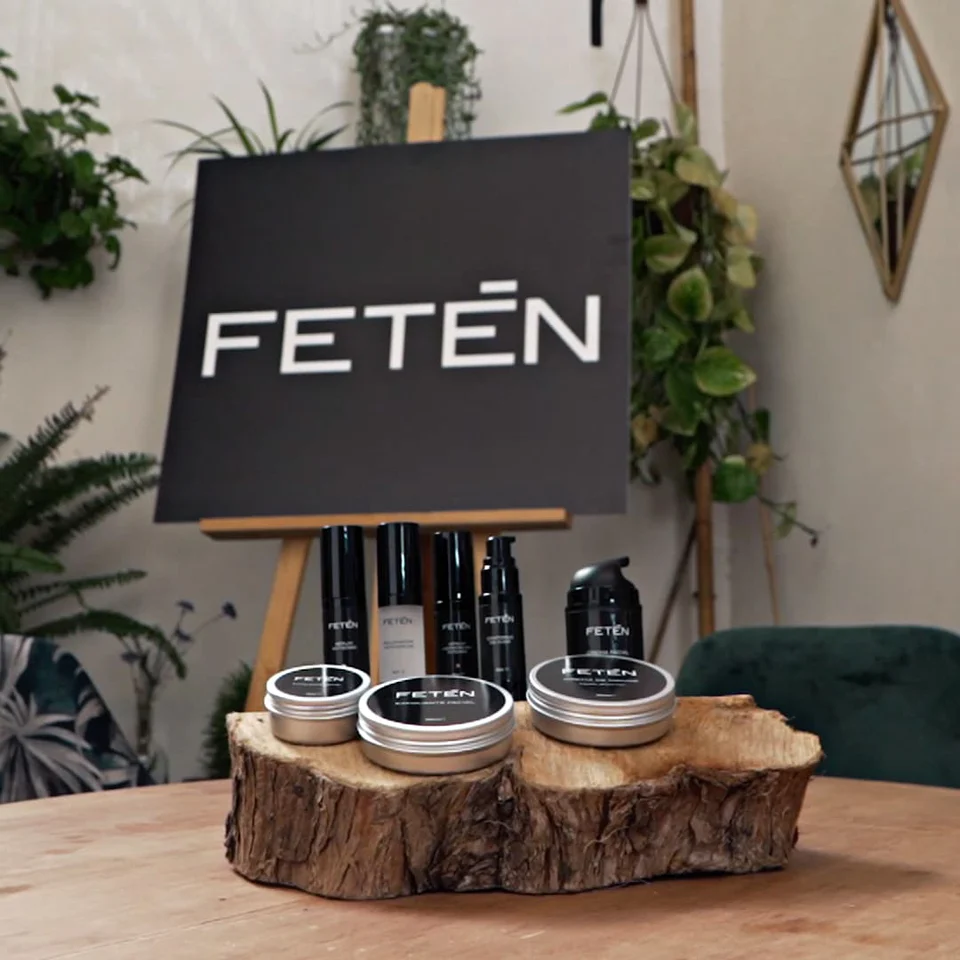
FETĒN is an emerging premium men’s skincare brand rooted in Spain, built on the belief that fast-absorbing, shine-free, and immediately effective skincare should be equally accessible to men. As the brand expands across Europe, Amazon has become a critical channel for both discovery and scale.
Black Friday and Cyber Monday represent one of the most competitive and high-intent periods in the European grooming category. For FETĒN, BFCM was not just about short-term sales, but about strengthening market presence in a category dominated by global incumbents.
Objectives and Challenges
FETĒN entered BFCM with the ambition to significantly accelerate revenue and expand its market share in Spain’s highly saturated men’s grooming category.
Competition was intense, with established brands commanding a disproportionate share of visibility. Premium placements were scarce, CPCs surged during peak windows, and FETĒN’s presence at top-of-search was limited, making it difficult to compete consistently for attention.
Seasonality further amplified the stakes. Demand for skincare rises sharply during colder months, making November and December critical for capturing intent. Visibility and conversion efficiency during this window directly influence performance well beyond the sale period.
Operationally, manual execution posed a major constraint. BFCM requires continuous, intraday optimization across bids, budgets, and placements. Without automation, the risk of missed visibility during key conversion windows was high.
Inventory constraints added another layer of complexity. A hero product faced limited availability, forcing the team to prioritize alternative SKUs and carefully plan new product launches, which had previously struggled to gain traction outside sale periods.
FETĒN’s objective was to balance aggressive scaling with control. Build awareness early, convert efficiently during peak days, and extend momentum into the Christmas and New Year period.
Adbrew’s hands-off bid management gave us confidence to step back from daily optimizations and focus on strategy, while still improving our ROAS.

Edu López-Villalta
Co-Founder, FETĒN

The Solution
1. A Three-Phase Seasonal Strategy
FETĒN structured its BFCM approach around a three-phase model that aligned budget, targeting, and automation with evolving shopper intent.
Phase 1: Awareness and Consideration
The campaign began with a strong focus on visibility. Sponsored Products campaigns using broad and expanded product targeting were used to warm up audiences and build relevance ahead of the sale.
Competitor product targeting played a key role in intercepting shoppers actively comparing alternatives. AMC insights revealed that customers often entered through lower-commitment products before returning for higher-value purchases, guiding early spend toward trial-friendly SKUs.
Creative assets were refreshed ahead of the event, improving conversion readiness as traffic increased.
Phase 2: Conversion Activation
During BFCM, the strategy shifted aggressively toward conversion. Campaigns were optimized for top-of-search placements, where conversion rates peak during major events.
Rule-based automation managed bids, budgets, and placement modifiers in real time, scaling high-performing targets while pulling back on inefficient ones. This allowed FETĒN to stay competitive during CPC spikes without manual intervention.
Upsell-focused campaign structures ensured bid control across SKUs, while automation responded dynamically to changes in ROAS and conversion rates.
Phase 3: Retargeting and Seasonal Roll-Forward
Rather than resetting post-sale, the same campaign architecture was carried into the Christmas and New Year period.
AMC audiences built during BFCM, including cart abandoners and product detail page viewers, were retargeted with refined messaging and increased budgets. This approach treated BFCM as a launchpad rather than an endpoint, extending engagement and conversion into the next peak.
Results and Impact
FETĒN’s Black Friday & Cyber Monday strategy delivered strong gains across visibility, conversion, and sustained post-event growth, proving that automation-led execution can help challenger brands compete effectively in a highly saturated men’s grooming category.
Pre-Event Impact (Awareness & Consideration)
45%+ increase in impressions during the lead-in period, driven by broad and competitor targeting
35%+ growth in clicks while maintaining stable CTR, indicating efficient reach expansion
40%+ improvement in Share of Voice, strengthening brand visibility ahead of peak demand
Faster funnel warm-up, with the majority of conversions occurring within short attribution windows, enabling effective retargeting later
BFCM Peak Performance (Conversion & Scale)
50%+ increase in orders during the peak event window
30%+ growth in ad-attributed sales compared to the pre-event phase
Improved efficiency despite scale, with ACOS declining versus the awareness phase
Top-of-Search placements delivered the highest conversion rates, outperforming rest-of-search and product page placements
Successful upsell behavior, where a significant share of first-time buyers of entry-price products returned to purchase higher-value SKUs
Post-Event & Roll-Forward Momentum (Retention & Expansion)
2× sales uplift during the subsequent Christmas & New Year period, using the same campaign structure
Stronger repeat purchase behavior, driven by AMC-powered cart abandoner and PDP viewer retargeting
New product momentum, with a BFCM-launched SKU emerging as a top-selling non-bundle product post-event
Sustained visibility without reset, allowing the brand to extend BFCM gains instead of experiencing a post-sale drop
Outcome
By combining automation-first execution, AMC-led insights, and disciplined phase-based planning, FETĒN transformed BFCM from a high-risk sales spike into a sustained growth opportunity. The brand successfully defended visibility against category leaders, scaled revenue with control, and carried momentum into subsequent seasonal events.