How to Use AI in Amazon Advertising (6 Use Cases for 2026)

Shivam Kumar

If you manage Amazon ads day to day, you’ve probably felt this already. There’s more data than you can realistically look at, more decisions to make, and less time to react when something shifts.
What used to be a weekly optimization task now feels constant.
Over the past year, Amazon has quietly added more AI into its advertising stack, from bidding and targeting to creative and measurement. At the same time, third-party advertising platforms and tools are building their own AI capabilities to help advertisers analyze data, automate actions, and move faster without adding more manual work.
In this article, we’ll look at how AI is being used across Amazon Advertising today, what problems it actually helps solve, and how advertisers can use it as a support system.
TL;DR
AI is now a practical part of Amazon advertising, helping reduce manual work across reporting, analysis, campaign setup, creative testing, and optimization.
It allows advertisers to analyze large datasets quickly and connect insights across keywords, products, bids, budgets, and performance changes.
Tasks that once required jumping between reports and tools can now happen in a single flow, making decisions faster and clearer.
Amazon’s built-in AI features and third-party tools like Adbrew work together to support this shift.
The biggest value of AI is focus. Advertisers spend less time on repetitive work and more time on strategy and growth while staying in control.
The rise of AI in advertising
AI is becoming a normal part of how advertising teams work, not an experiment. Across digital marketing, brands are using AI to analyze data faster, automate routine tasks, and make decisions with more confidence.
Recent studies show that over 80% of marketers now use AI in some form, whether for reporting, content creation, or performance analysis. At the same time, the global AI in advertising market is expected to grow more than 4x over the next decade, driven by the need to handle large volumes of data and real-time optimization.
This shift is not limited to search or social ads. Ecommerce and retail advertising are seeing the same change, as platforms generate more signals than humans can realistically process on their own.
For Amazon advertisers, the relevance is clear. Amazon advertising operates at the intersection of search, retail, and performance marketing.
As AI becomes standard across the wider advertising industry, the same tools and approaches are naturally shaping how Amazon ads are planned, optimized, and scaled. The next sections explore how this shift is showing up inside the Amazon ecosystem and why it matters for your Amazon business.

How to Use AI in Amazon Advertising
1. Performance Summarization and Strategic Reporting
Before AI
Reporting was mostly about pulling numbers together.
You downloaded reports, filtered data, built spreadsheets, and tried to explain what changed. Most of the effort went into preparing the report, not thinking about the business. Context lived in your head. The report itself rarely knew about seasonality, product launches, stock issues, or shifting priorities.
Two people could look at the same report and come away with different conclusions. And by the time the report was ready, the account had already moved on.
After AI
AI makes reporting feel less like data work and more like a conversation.
Instead of starting from raw numbers, the system already understands your business context. Which products matter most. What “good” performance looks like for your brand. Whether a change is expected because of seasonality or something that actually needs attention.
So when performance shifts, the insight is more natural. Not just “ACOS went up,” but why that matters right now and what it likely connects to.
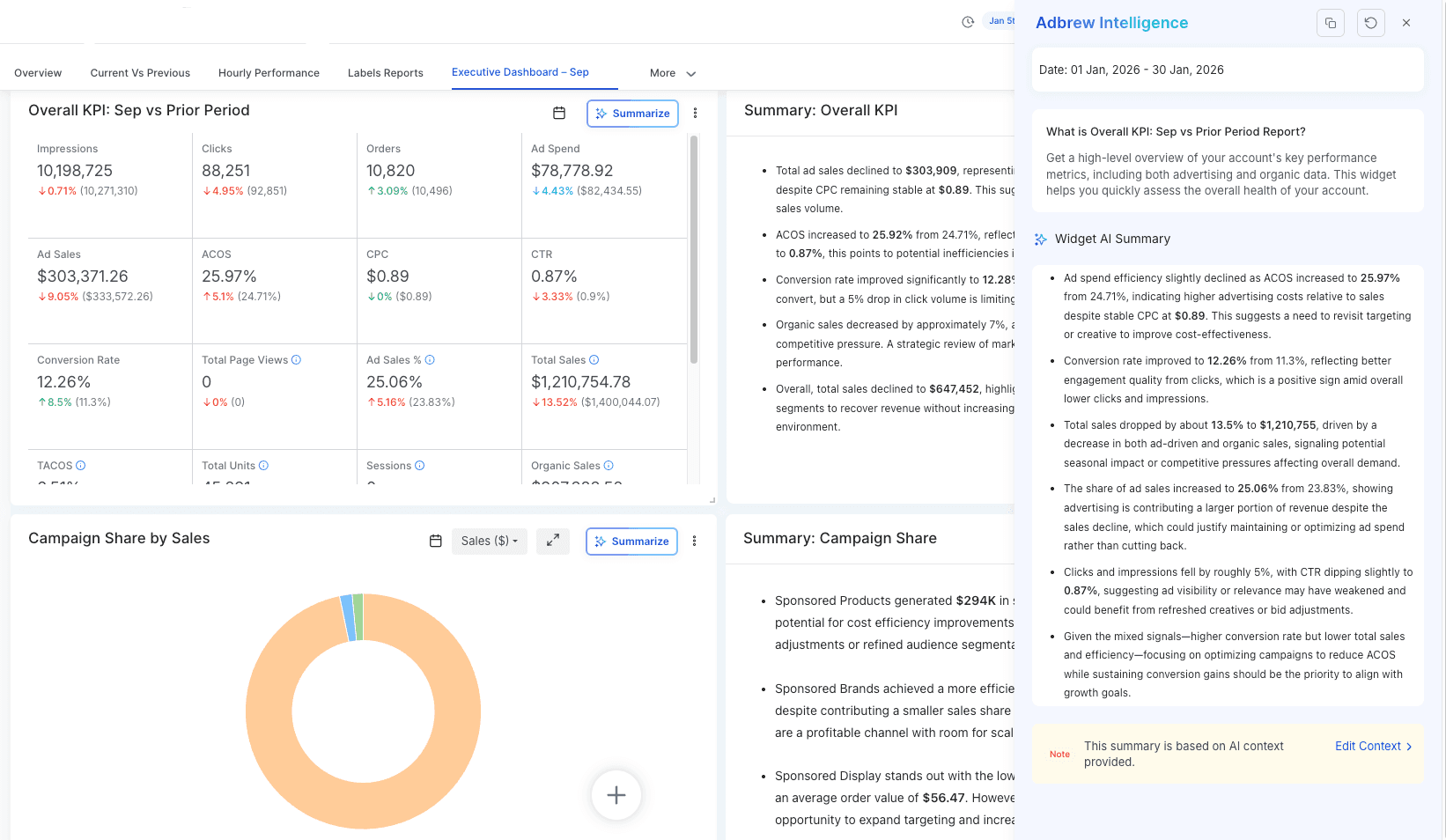
With tools like Adbrew, you can also ask for reports the way you’d ask a teammate. You might ask to see underperforming campaigns, compare this week to last month, or review spend efficiency across priority ASINs. The dashboard updates instantly without manually building views.
2. Question Answering and Root Cause Analysis
Before AI
When something went wrong, finding the reason took time.
If sales dropped or ACOS suddenly increased, you had to dig. You checked keywords, then bids, then search terms, then pricing, then inventory, then competitors. Each answer lived in a different report, and putting the story together depended on experience and patience.
Often, by the time you figured out what happened, the damage was already done. And sometimes, you were still not fully sure which change actually caused the problem.
After AI
You can now give AI direct access to your advertising data and let it do the heavy lifting.
Instead of manually opening reports, AI can scan large datasets across campaigns, keywords, placements, products, pricing, and inventory in seconds. What used to take hours of back-and-forth analysis can now happen almost instantly.
You ask a simple question. Why did sales drop last week? Why did spend go up without conversions? Why did one ASIN stop performing? The AI looks across all relevant data at once and connects the dots.
With Adbrew Intelligence, this works by connecting directly to your Amazon Ads data. The system reviews historical and recent performance together, identifies patterns, and surfaces the most likely reasons behind the change. Instead of isolated metrics, you get a clear explanation of what happened and where to focus next.
3. Agentic AI That Takes Action
Before AI
Even when you knew what to do, execution still took time.
You identified poor keywords, overspending campaigns, or products that needed more budget. But fixing things meant logging into the account, making bulk changes, double-checking settings, and hoping nothing was missed. If performance shifted outside working hours or over the weekend, campaigns often ran inefficiently until someone stepped in.
Optimization was reactive and tied to human availability.
After AI
Agentic AI changes this by moving from insight to execution.
Instead of only pointing out issues, the system actively monitors performance and prepares actions. It can identify underperforming keywords, spot wasted spend, or detect opportunities to scale winning products. With approval, it can then apply those changes automatically.
For example, if certain keywords consistently fail to convert, the AI can pause them. If a product starts gaining traction, it can shift budget or increase bids to capture demand. All of this happens based on rules, goals, and guardrails you define.
Tools like Adbrew use this approach to keep campaigns moving in the right direction without constant manual oversight. You stay in control of strategy, while the AI handles execution at speed.
The biggest difference is coverage. Optimization no longer depends on how often you check the account. Campaigns stay responsive throughout the day, even when you are focused on other work.
4. Creative Generation for Ads and Listings
Before AI
Creative work was slow and often a bottleneck.
Writing ad copy, refreshing headlines, updating images, or creating videos usually required designers, copywriters, and multiple rounds of feedback. Testing new ideas took time, so most advertisers stuck with the same creatives longer than they should have.
As a result, creative testing was limited, and performance often plateaued not because targeting was wrong, but because the message stopped resonating.
After AI
You can now use AI to make creative testing part of your normal workflow.
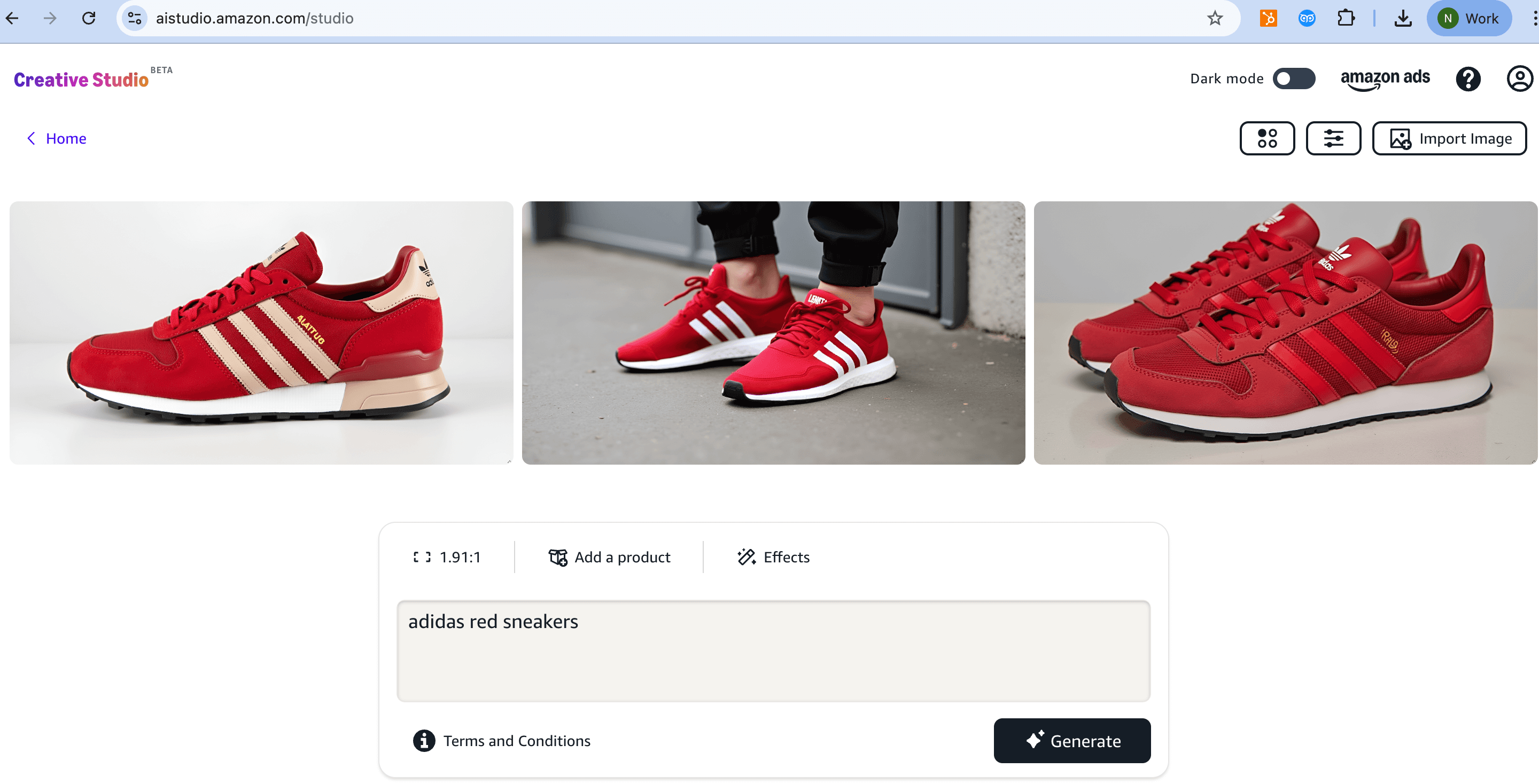
Amazon has been investing heavily in this area. With the launch of Amazon Creative Studio, advertisers can generate images and videos using product data and simple inputs, instead of starting from scratch. This makes it much easier to refresh visuals, test seasonal ideas, or create variations without long production cycles.
Amazon has also started using AI to test and rotate Sponsored Brands headlines automatically. Instead of choosing one headline and hoping it works, the system can generate multiple variations and learn which messages resonate better with shoppers over time.
On the video side, Amazon’s AI video generation tools allow advertisers to create short video ads using basic product information, images, and text prompts. This lowers the barrier to entry for video advertising and makes it easier to test video formats alongside standard ad types.
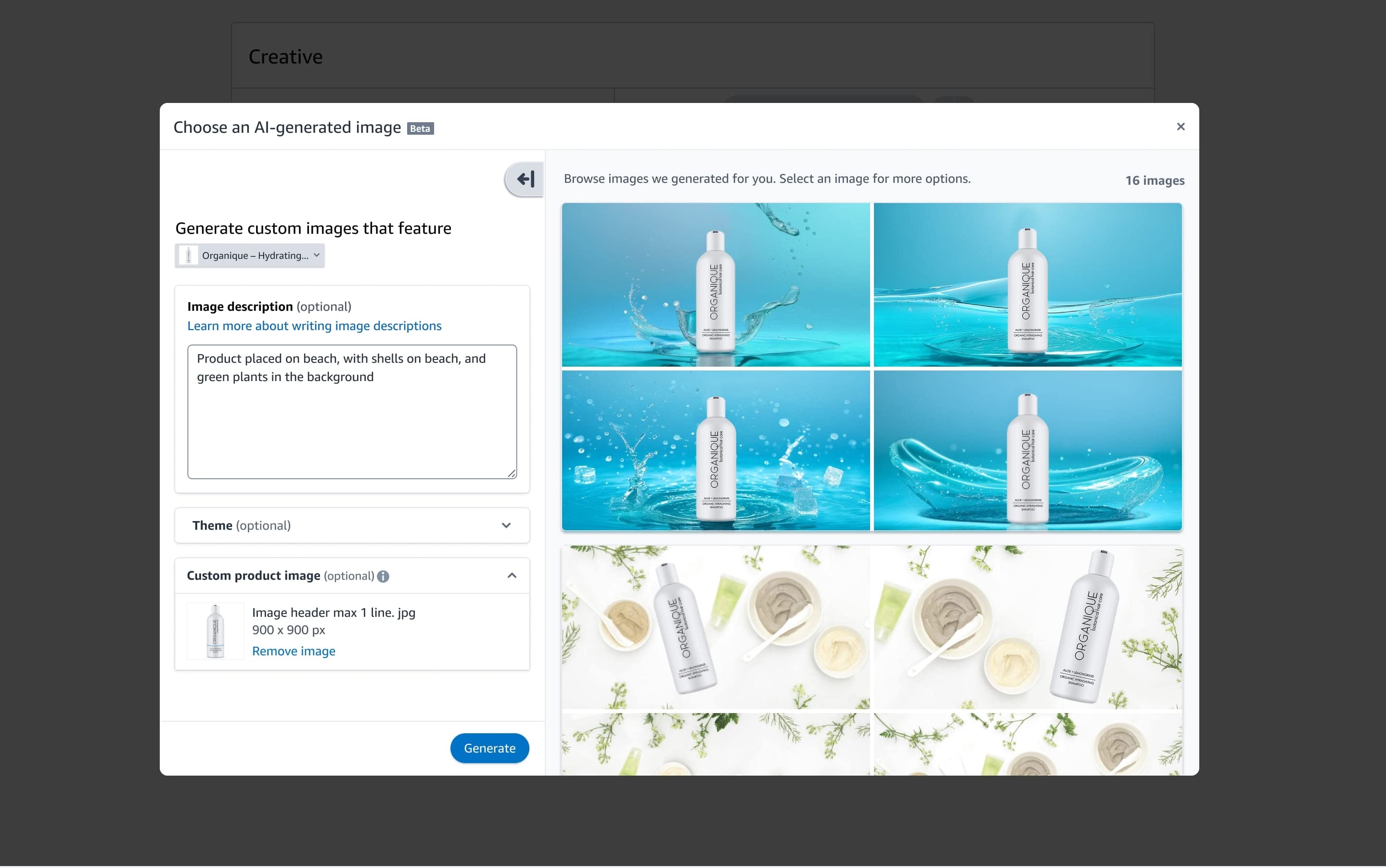
The shift here is simple. Creative no longer needs to be perfect before it goes live. You can test more ideas, learn faster, and improve messaging continuously without adding a lot of manual work.
5. Hourly Data Analysis and Dayparting
Before AI
Most advertisers knew hourly performance data existed, but very few actually used it.
Amazon Marketing Stream provides data by the hour, but analyzing it was painful. The files were large, noisy, and hard to work with. To do dayparting properly, you had to clean the data, look for patterns across multiple days, decide which hours to scale or cut, and then manually apply rules.
It took a lot of time and confidence. One wrong assumption could hurt performance. So for most teams, dayparting stayed on the wishlist and never made it into a real use case.
After AI
AI makes hourly optimization practical.
Instead of manually analyzing raw hourly data, AI scans it automatically and looks for repeatable patterns. It identifies hours where conversion rates are consistently strong, hours where spend is wasted, and how those patterns differ by campaign or product.
From there, AI can suggest or generate dayparting strategies. You don’t have to guess which hours matter or build complex rules. You can simply review the recommendation and apply it.
With tools like Adbrew, advertisers can go a step further and create dayparting or budget pacing strategies using simple prompts.
The system handles the analysis and execution, while you stay focused on whether the strategy makes sense for your business.

6. Campaign Launch and Scaling at Speed
Before AI
Launching campaigns meant doing a lot of small things manually.
You looked at past performance to understand what might work. You decided which keywords or targets to use. You picked starting bids and budgets. Then you created campaigns one by one inside Amazon Ads.
None of this was difficult on its own. But doing all of it together took time and focus. You had to switch constantly between reports, decisions, and setup screens.
When you had many products or frequent launches, this became exhausting. So campaigns were often launched late, kept very simple, or not launched at all.
After AI
You can use AI to reduce the back-and-forth.
Instead of checking reports first and building campaigns later, AI looks at your past data and prepares a starting point for you. It reviews how similar products performed, which targets worked before, and what bid ranges made sense.
With Adbrew Intelligence, you can use AI to suggest targets, starting bids, and budgets based on what has already happened in your account. You review it, adjust if needed, and then launch.
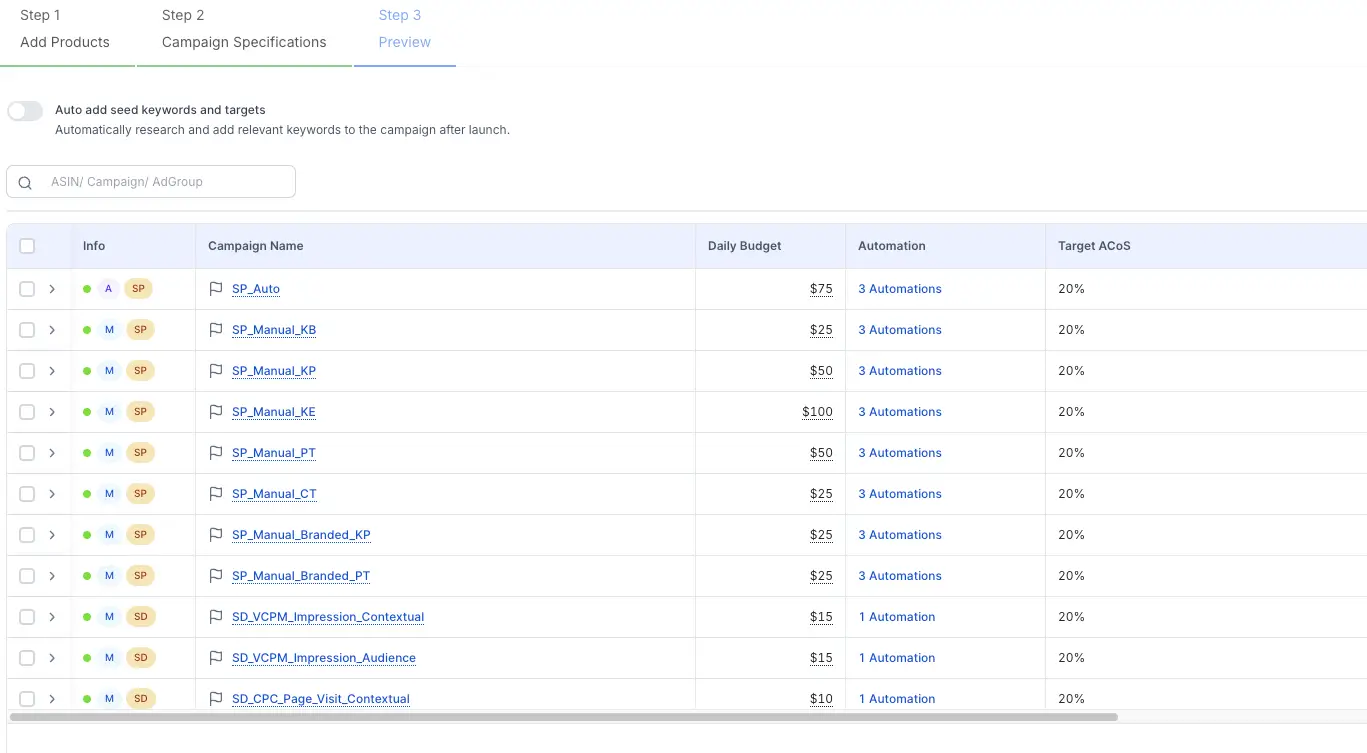
You are not handing control to the system. You are avoiding repeated manual steps.
Campaign launch becomes less about clicking through settings and more about deciding whether the setup looks right. This makes it easier to launch campaigns regularly, even when your catalog grows.
Conclusion
AI is slowly changing how Amazon advertising work gets done. Not by replacing people, but by removing a lot of the manual effort that used to slow teams down.
Across reporting, investigation, campaign setup, creative testing, and optimization, AI helps connect steps that were previously scattered across tools, reports, and tabs. What once required constant switching between data, decisions, and execution can now happen in a more natural flow.
The biggest benefit is not automation for its own sake. It’s focus. When AI handles the heavy data work, advertisers can spend more time thinking about strategy, priorities, and growth instead of chasing numbers or fixing issues too late.
Whether you use Amazon’s built-in AI capabilities, third-party platforms, or tools like Adbrew, the direction is clear. AI is becoming part of everyday Amazon advertising. The teams that learn how to work with it thoughtfully will move faster, make better decisions, and stay in control as complexity continues to grow.
Frequently Asked Questions
Will AI replace manual Amazon ad management?
No. AI reduces manual work, but it does not replace judgment. Advertisers still decide goals, budgets, brand positioning, and creative direction. AI helps with analysis, monitoring, and execution, so humans can focus on strategy instead of repetitive tasks.
Do I need technical skills to use AI for Amazon advertising?
Not really. Most AI tools are designed to work through simple inputs like questions, prompts, or settings. You do not need to know coding or data science. What matters more is understanding your business and knowing what questions to ask.
Is Amazon already using AI inside its ad platform?
Yes. Amazon uses AI across bidding, targeting, creative testing, and reporting. Features like automated bidding, Sponsored Brands headline testing, Creative Studio, and AMC-based insights all rely on machine learning.
How is third-party AI different from Amazon’s built-in tools?
Amazon’s tools focus on execution inside its platform. Third-party tools often focus on analysis, planning, and cross-campaign insights. Many advertisers use both together. Amazon for delivery and third-party AI for decision support.