Amazon Prep Services Explained: Costs, Setup, and Alternatives for 2026

Nishant Singh
Getting Amazon FBA prep wrong can cost you more than time. A missing label or incorrect packaging can delay shipments, trigger extra fees, or keep your products from going live.
Amazon FBA prep services exist to prevent exactly that. They handle labeling, packaging, inspections, and bundling so your inventory arrives compliant and ready for fulfillment.
Amazon has strict preparation rules, and even experienced sellers run into issues when scaling or managing multiple SKUs. Understanding these requirements, outlined in Amazon’s FBA product preparation guidelines, is key to avoiding costly mistakes.
In this guide, we’ll explain how FBA prep services work, when they make sense, and how to choose the right prep strategy as your business grows.
TL;DR
Amazon FBA prep services help sellers meet Amazon’s labeling, packaging, and compliance requirements before inventory reaches fulfillment centers.
Using a prep service reduces errors, shipment delays, and the risk of rejected inventory.
Sellers can prep inventory themselves or work with third-party prep providers, depending on volume and complexity.
Choosing the right provider depends on experience, service range, pricing transparency, and turnaround time.
Amazon will end in-house FBA prep and item labeling services in the U.S. starting January 1, 2026.
U.S. sellers must prep and label inventory themselves or use third-party FBA prep providers.
What Are Amazon FBA Prep Services?
Amazon FBA prep services help sellers prepare their products so they meet Amazon’s fulfillment requirements before being sent to an Amazon warehouse. This includes tasks like labeling products with FNSKU barcodes, packaging items correctly, applying warning labels, bundling products, and checking for damage or compliance issues.
The goal of FBA prep is simple: make sure inventory arrives at Amazon fully compliant and ready to be received without delays. Products that aren’t prepared correctly can be held up, rejected, or charged additional fees, which can disrupt sales and inventory planning.
Sellers can handle prep work themselves or outsource it to third-party FBA prep providers. These providers specialize in Amazon’s preparation standards and help sellers manage prep at scale, especially when dealing with multiple SKUs, overseas suppliers, or high-volume shipments.
Benefits of Using Amazon FBA Prep Services
1. Fewer Compliance Errors and Rejections
Amazon has strict rules for labeling, packaging, and product safety. Even small mistakes like missing FNSKU labels or incorrect poly bagging can lead to shipment delays or rejected inventory.
FBA prep services help ensure products meet Amazon’s requirements before they reach a fulfillment center, reducing costly errors. Amazon outlines these requirements clearly in its FBA product preparation guidelines.
2. Saves Time as Your Business Scales
As your catalog grows, prepping inventory manually becomes time-consuming and harder to manage. Outsourcing prep work allows sellers to focus on sourcing, marketing, and demand planning instead of labeling and packaging every unit.
Many high-volume sellers rely on prep services to scale efficiently without adding warehouse space or staff, especially when managing multiple SKUs or international suppliers.
3. Faster Receiving and Inventory Availability
Properly prepped inventory moves through Amazon’s receiving process more smoothly. When items arrive compliant and ready for storage, they are checked in faster and become available for sale sooner.
Amazon notes that non-compliant shipments can cause delays and additional handling in its FBA inbound shipping best practices, making correct prep a key factor in maintaining inventory flow.
4. Better Handling for Fragile or Complex Products
Products that require bubble wrapping, bundling, warning labels, or special packaging are more likely to be damaged or delayed if prepped incorrectly. Experienced prep services know how to handle these cases consistently and according to Amazon standards.
This is especially useful for sellers in categories like electronics, beauty, home goods, or bundled products.
5. Predictable Operations and Fewer Surprises
While FBA prep services add a per-unit cost, they often reduce unexpected issues like shipment holds, rework, or emergency removals. For many sellers, this predictability is worth the trade-off, particularly during peak seasons.
Consistent prep processes help stabilize operations and protect long-term account health.
Important Update for U.S. Sellers in 2026
Amazon has announced that it will end its in-house FBA prep and item labeling services in the U.S. starting January 1, 2026. After this change, sellers shipping to U.S. fulfillment centers will need to ensure inventory is fully prepped and labeled before it arrives, either by handling prep themselves or by using third-party FBA prep services.
While this update applies specifically to the U.S. marketplace, it highlights a broader shift toward greater seller responsibility for prep and compliance. Sellers in other regions should also stay alert to similar changes as Amazon continues to refine its fulfillment operations globally.
How Amazon FBA Prep Services Work (Step-By Step Process)
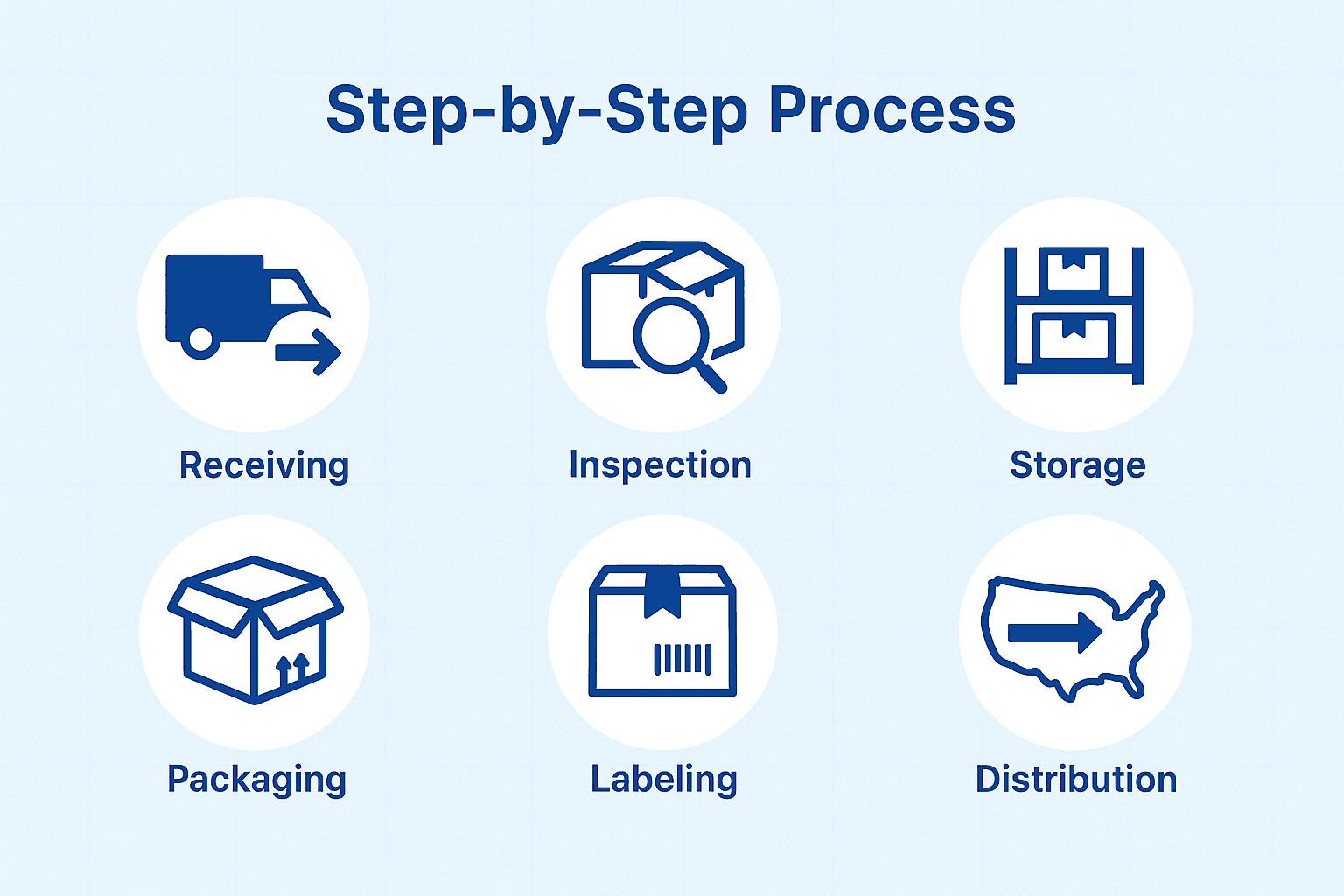
How Amazon FBA Prep Services Work (Step-by-Step Process)
Step 1: Inventory Is Sent to the Prep Center
Your products are shipped from your supplier, manufacturer, or warehouse to an FBA prep service location instead of directly to Amazon. Many sellers route inventory straight from overseas suppliers to avoid double handling.
Step 2: Receiving and Initial Check
Once the inventory arrives, the prep center counts units and checks for visible damage or discrepancies. This step helps catch issues early before items are sent to Amazon fulfillment centers.
Step 3: Product Inspection
Prep teams inspect products based on Amazon’s preparation requirements. This may include checking packaging integrity, verifying product condition, and confirming that items match your SKU and listing details.
Step 4: Packaging and Prep Work
The prep service applies the required preparation based on product type, such as:
Poly bagging
Bubble wrapping
Shrink wrapping
Bundling or kitting
Applying suffocation or warning labels
Step 5: Labeling (FNSKU and Shipment Labels)
Each unit is labeled with the correct FNSKU barcode if required. Cartons are also labeled properly to match your shipment plan in Seller Central, ensuring Amazon can scan and route inventory correctly.
Step 6: Shipment Creation in Seller Central
Either you or the prep service creates the inbound shipment in Amazon Seller Central. This includes selecting the fulfillment centers, box contents, and shipping method.
Step 7: Inventory Is Shipped to Amazon Fulfillment Centers
Once prep and labeling are complete, the prep service ships the inventory to Amazon fulfillment centers. Tracking details are shared so you can monitor delivery and receiving status.
Step 8: Receiving and Availability
After Amazon receives the shipment, inventory is checked in and made available for sale. Properly prepped inventory usually moves through receiving faster and with fewer issues.
Choosing the Right FBA Prep Service Provider
Not all FBA prep services are the same. The right provider can save you time and prevent costly mistakes, while the wrong one can create delays, errors, and unnecessary fees. Before choosing a prep partner, it’s important to evaluate a few key factors.
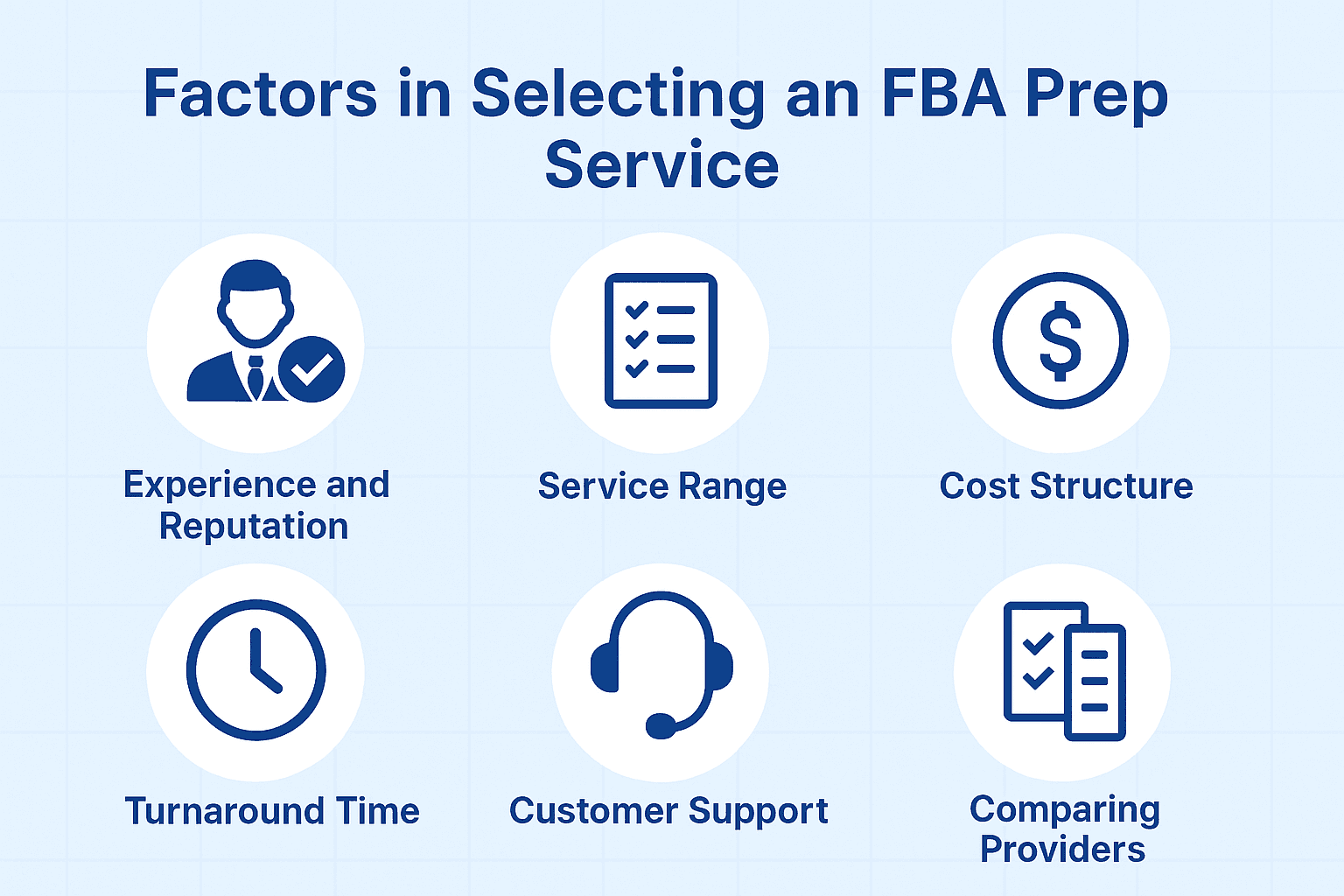
1. Experience With Amazon FBA Requirements
Look for providers that specialize in Amazon FBA, not just general fulfillment. Experienced prep centers understand Amazon’s packaging, labeling, and compliance rules and stay updated as requirements change. This reduces the risk of rejected or delayed shipments.
Ask how long they’ve been working with Amazon sellers and whether they handle products similar to yours.
2. Range of Prep Services Offered
Choose a provider that offers all the services you need in one place, such as:
Product inspection
FNSKU labeling
Poly bagging and bubble wrapping
Bundling or kitting
Carton labeling and shipment prep
A full-service provider saves time and reduces coordination issues.
3. Transparent Pricing Structure
Prep fees are usually charged per unit or per service. Make sure pricing is clearly explained and ask about:
Minimum fees
Storage charges
Receiving or handling fees
Rush or peak-season surcharges
The cheapest option isn’t always the best. Reliability and accuracy matter more than small price differences.
4. Turnaround Time and Capacity
Fast and consistent turnaround is critical, especially during peak sales periods. Ask how long receiving, prep, and outbound shipping usually take and whether the provider can handle higher volumes when your business scales.
Delays at the prep stage can lead to stockouts and lost sales.
5. Communication and Support
Clear communication is essential. Choose a provider that:
Responds quickly to questions
Shares receiving and prep updates
Flags issues before shipping to Amazon
Good support helps resolve problems early instead of after inventory reaches a fulfillment center.
6. Location and Shipping Efficiency
A prep center located near major ports or close to Amazon fulfillment centers can reduce transit time and shipping costs. This is especially important for sellers importing inventory from overseas.
7. Willingness to Start Small
Before committing fully, test the provider with a small shipment. This lets you evaluate accuracy, speed, and communication without risking large volumes of inventory.
Pros and Cons of FBA Prep Services
Pros | Cons |
|---|---|
Expert handling, reducing errors | Outsourcing can be costly for small businesses |
Scalability as your business grows | Reliance on third-parties for critical tasks |
Frees up time for core business focus | Potential for miscommunication |
Pros of Amazon FBA Prep Services
1. Reduces Compliance Errors
Professional prep services understand Amazon’s packaging and labeling requirements and apply them consistently. This lowers the risk of rejected shipments, delayed receiving, or inventory being flagged as non-compliant.
2. Saves Time and Operational Effort
Outsourcing prep work frees you from manual tasks like labeling, bagging, and packaging. This allows sellers to focus on product research, sourcing, marketing, and scaling their business.
3. Easier to Scale Across SKUs and Regions
As order volume grows, handling prep internally becomes difficult. Prep services make it easier to manage larger shipments, seasonal spikes, and multiple SKUs without adding warehouse space or staff.
4. Better Handling for Fragile or Complex Products
Items that require bubble wrap, poly bagging, bundling, or special warnings are often handled more reliably by experienced prep teams, reducing damage and customer complaints.
5. Supports Global Selling Models
For sellers sourcing from manufacturers or shipping inventory internationally, prep services help ensure products meet Amazon’s regional requirements before entering fulfillment centers.
Cons of Amazon FBA Prep Services
1. Additional Cost Per Unit
Prep services charge per item or per task, which can reduce margins, especially for low-priced products or new sellers with smaller volumes.
2. Less Direct Control Over Inventory Handling
When prep is outsourced, sellers rely on third parties to follow instructions correctly. Mistakes or delays at the prep center can still impact inbound shipments.
3. Communication Is Critical
Clear guidelines are required to avoid labeling or packaging errors. Poor communication can lead to incorrect prep or missed requirements.
4. Not Always Necessary for Simple Products
For sellers with a small catalog or simple packaging needs, doing prep in-house may be faster and more cost-effective than outsourcing.
5. Provider Quality Can Vary
Not all prep services are equally reliable. Choosing the wrong provider can result in slow turnaround times, errors, or hidden fees.
The Future of FBA Prep Services
Industry Changes and Trends
Amazon’s decision to phase out its in-house FBA prep services by 2026 marks a significant shift in the industry (Supply Chain Dive). This change means Amazon sellers must either handle prep tasks themselves or rely on third-party services. As a result, the demand for reliable FBA prep providers is expected to rise, emphasizing the importance of choosing a trustworthy partner.
Conclusion
Amazon FBA prep services have long helped sellers meet fulfillment standards and keep inventory moving smoothly through Amazon’s network. As Amazon continues to refine how prep and labeling are handled globally, sellers everywhere need to take a more active role in how their inventory is prepared before it reaches a fulfillment center.
In the U.S., Amazon has announced that its in-house FBA prep and labeling services will end starting January 1, 2026. While this change applies specifically to the U.S. marketplace, it reflects a broader shift toward greater seller responsibility and reliance on external prep solutions. Sellers in other regions should also expect prep requirements and processes to continue evolving over time.
Moving forward, having a clear prep strategy is essential. That might mean preparing products in-house, working with a trusted third-party prep center, or using a hybrid approach based on product type, volume, and location. What matters most is ensuring inventory arrives fully compliant, correctly labeled, and ready for fulfillment.
Sellers who plan ahead and build reliable prep workflows will avoid delays, reduce errors, and keep products available for customers without interruption. As Amazon’s fulfillment ecosystem changes, strong preparation processes will become a competitive advantage, allowing sellers to focus on scaling their business instead of fixing preventable fulfillment issues.
Amazon FBA Prep Services FAQs
This FAQ section answers the most common and practical questions Amazon sellers have about FBA prep services, especially as Amazon phases out its in-house prep and labeling options in the U.S.
1. What exactly are Amazon FBA prep services?
Amazon FBA prep services include preparing products so they meet Amazon’s fulfillment requirements before being sent to an Amazon warehouse. This typically involves labeling (FNSKU), poly bagging, bubble wrapping, bundling, applying warning labels, and ensuring packaging meets Amazon’s guidelines. Prep can be done by the seller, a third-party prep center, or previously by Amazon itself.
2. Is Amazon really ending its in-house FBA prep and labeling services?
Yes. Amazon has officially announced that starting January 1, 2026, it will stop offering all in-house FBA prep and item labeling services in the U.S. After this date, sellers must prep and label inventory themselves or use third-party FBA prep providers.
3. What does this change mean for Amazon sellers?
This change means sellers must take full responsibility for making sure inventory arrives at Amazon fulfillment centers fully compliant. Any missing labels, incorrect packaging, or prep issues can lead to delays, extra fees, or rejected shipments. As a result, third-party FBA prep services are becoming a critical part of many sellers’ operations.
4. Can I still label products myself instead of using a prep service?
Yes. Sellers can continue to label and prep products themselves. You can select “Merchant” as the labeling option in Seller Central and apply FNSKU labels before shipping inventory. This works well if you have the time, space, and processes to follow Amazon’s prep requirements accurately.
5. When does it make sense to use a third-party FBA prep service?
Using a third-party prep service is usually helpful if you:
Ship large or frequent inbound orders
Manage multiple SKUs
Source products from overseas manufacturers
Want to reduce compliance errors and delays
Don’t have warehouse space or staff for prep
For many sellers, the cost of prep services is offset by time savings and fewer costly mistakes.
6. How much do third-party FBA prep services typically cost?
Costs vary based on product size, prep complexity, and volume. Most prep services charge per unit, often ranging from $0.40 to $1.00+ per item, with additional fees for services like bundling, bubble wrap, or storage. Always review pricing carefully and factor prep costs into your product margins.
7. What happens if my products arrive at Amazon without proper prep?
If inventory arrives non-compliant, Amazon may:
Delay receiving
Reject the shipment
Require removal orders
Apply additional fees
After 2026, Amazon will no longer fix prep or labeling issues for sellers in the U.S., which makes proper preparation even more important.
8. Are FBA prep services required for all products?
No. Prep services are not mandatory for every product. However, many categories and product types have specific prep requirements. Fragile items, liquids, sharp products, and bundles often require extra preparation to meet Amazon’s standards.
9. Can I switch between prep providers or do a hybrid approach?
Yes. Many sellers use a hybrid setup. For example, you might prep simple products in-house and use a third-party prep center for bulk shipments, fragile items, or peak seasons. This approach helps balance cost, control, and scalability.
10. How do I choose a reliable FBA prep service provider?
Look for providers with:
Proven experience with Amazon FBA
Clear pricing and service descriptions
Fast turnaround times
Good communication and support
Familiarity with Amazon’s latest prep requirements
Testing a provider with a small shipment before scaling up is often a smart move.